A holiday catering job is not finished when the kitchen doors close. Food still has to travel, arrive in condition, and pass to someone who knows how it must be held and served. A short written transport plan helps a small team avoid last-minute venue surprises without treating a checklist as a substitute for food-safety procedures.
Confirm the venue handoff before loading
For each booking, confirm the delivery address, access instructions, travel and setup window, service start, receiving contact, and a backup phone number. Ask what holding equipment and power will be available, who will receive the food, and where the team can unload. Make those details specific: “the venue contact will meet the driver at the service entrance” is more useful than “deliver to the hall.”
Keep transport planning distinct from menu and purchasing work. The existing holiday menu, recipe, purchase, and supplies workflow helps establish what the event needs; the holiday cooler-capacity checklist addresses storage before delivery. This guide picks up when the food is ready to leave the kitchen.
Build the load around the food and service order
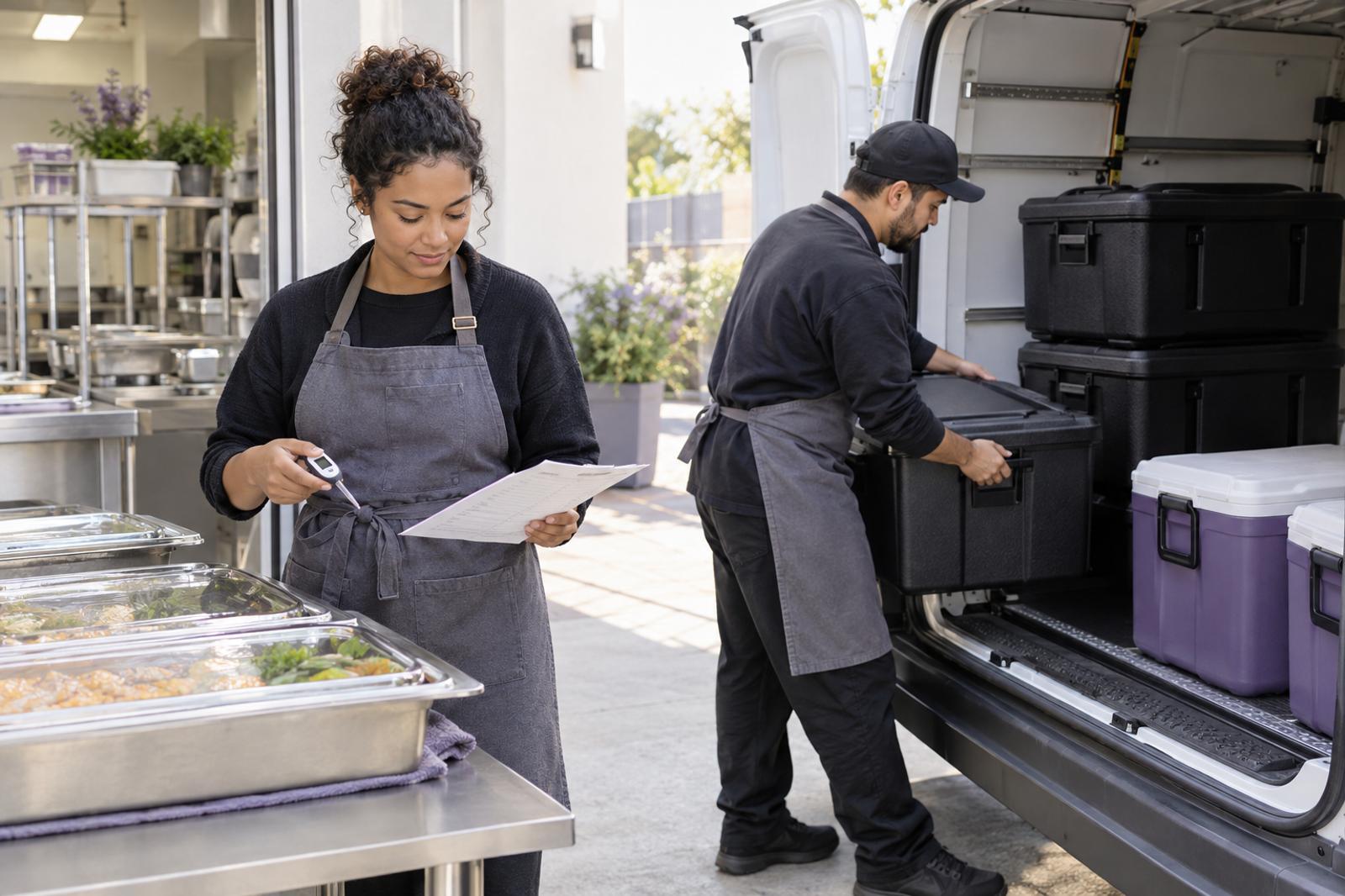
Make a load sheet that identifies each covered batch, whether it must travel hot, cold, or ready for finishing at the venue, its destination holding setup, and the person responsible for it. Use suitable, clean carriers and keep hot and cold loads separate. Pack in the order the team will unload and set up, while maintaining the operation’s approved separation between raw ingredients, ready-to-eat food, and other items that must not contact one another.
Check that the equipment needed to maintain the required conditions is available for the whole route and at the venue—not just at dispatch. USDA FSIS’s holiday food-transport reminders offer useful planning cues such as separating insulated hot and cold containers and checking conditions during travel. Treat that consumer-facing advice as supplementary; it does not replace the food-safety requirements that apply to a commercial kitchen or catering event.
Record the real departure and arrival checks
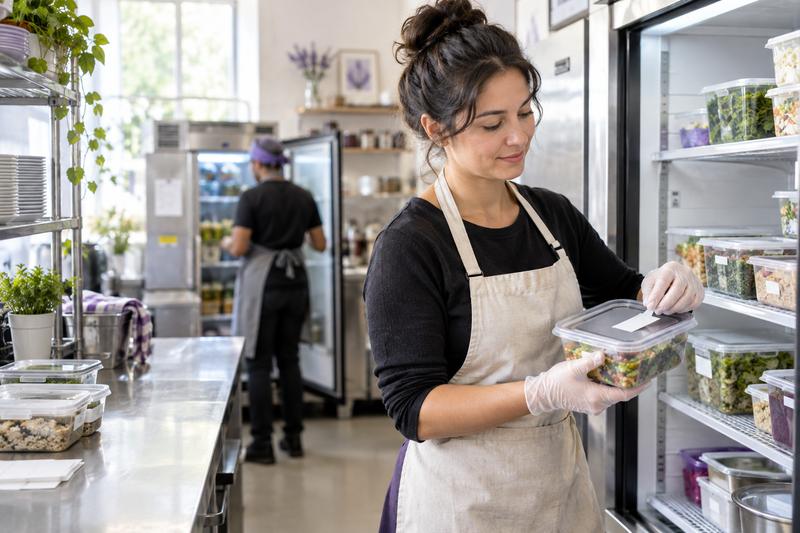
Name one person to perform and record the checks required by your written food-safety plan. Use the appropriate thermometer and method for the food and equipment. A concise log can note the event or batch, check time, measured result, carrier or holding location, checker’s initials, and any action taken. Record what you actually observe at departure and arrival rather than copying a planned value into the log.
Illustrative run sheet—not a safety standard: 10:15 a.m., assigned lead verifies the covered batches and required departure checks; 10:30 a.m., driver leaves with the venue contact’s number; 11:00 a.m., team arrives and records arrival checks; 11:10 a.m., receiver confirms the designated holding area is ready; noon, service begins. If the route or setup runs late, update the person in charge and follow the written procedure instead of silently shifting the plan. Times here are invented for illustration, not recommended holding limits.
Agree on a stop-and-escalate rule
Before the event, tell the team what to do if a carrier is damaged, a trip is delayed, a thermometer reading is outside the operation’s required range, the venue has no suitable holding equipment, or nobody is available to receive the food. Pause the handoff, contact the person in charge, document the issue, and follow the operation’s food-safety plan and local authority requirements. Do not use appearance, smell, or an unverified time allowance to decide that food is safe to serve.
The FDA Food Code page identifies the 2026 edition as the current full edition and explains that the Code is a model for jurisdictions. Requirements can depend on what your state or local authority has adopted or modified, so check the rules that apply to your operation and have the person in charge approve the procedure. Avoid mixing consumer guidance with commercial thresholds; use the applicable local standard for required temperatures, monitoring, and corrective action.
Quick dispatch-to-handoff checklist
- Confirm the venue address, access, delivery window, service start, receiver, and backup contact.
- Verify the destination’s required holding equipment, power, and setup location.
- List each covered batch, its handling category, destination, and assigned team member.
- Use clean, appropriate carriers; separate hot and cold loads and follow approved food-separation procedures.
- Load in service order and secure carriers for travel.
- Complete and record the required checks at dispatch and arrival using the operation’s procedure.
- Pause and escalate any delay, failed check, unavailable holding equipment, or missing receiver before service.
After the event, save the completed run sheet with the booking records and note any route or venue issue to resolve before the next delivery. Ququ Food’s current product information describes menu products and recipes, purchases and sales, supplies, inventory, and food finances; it does not claim to monitor transport or food temperatures. See Ququ’s current product overview for the module’s stated capabilities.