A recall notice is stressful enough without having to guess which delivery, prep batch, or menu item used the ingredient in question. A simple lot-tracking routine gives a small café or catering team a way to connect what arrived with where it went. It is a practical recordkeeping habit—not a substitute for food-safety procedures, official instructions, or advice from your local regulator.
Build a receiving record you can search
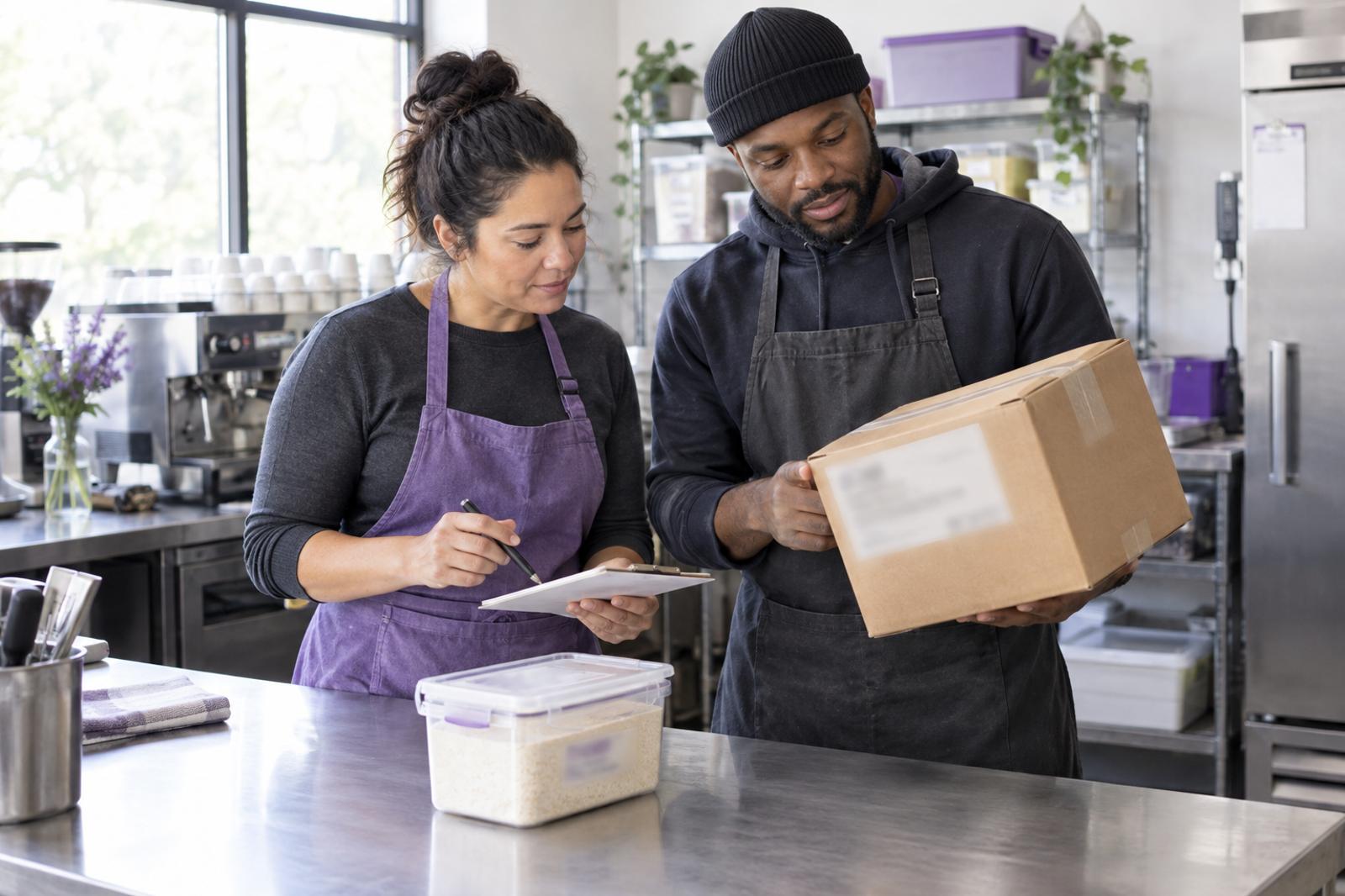
For each delivery, record the supplier, product and brand, package size, lot or product code, best-by or use-by date when present, date received, quantity and unit, invoice or other reference, and storage location. Keep a clear photo of the original case label when it contains the identifier, and retain the invoice or delivery document with the entry. If a supplier’s label has no lot code, note that rather than inventing one.
A compact receiving line might read: Oct 24 | baby spinach, 5-oz bags | Northside Produce | illustrative lot L2410A | 12 bags | invoice 8841 | walk-in shelf A. The values are fictional, but the structure is useful. For a step-by-step delivery check, see our food-delivery receiving routine.
Connect the lot to prep and service
Receiving alone tells you what entered the kitchen; it does not show whether it was used, remains in storage, or was discarded. Add a short use or disposition note when a package is opened: date, source lot, quantity used, prep batch or menu item, and any remaining quantity or disposal action. Give prep batches a simple, unique identifier such as a date plus a shift code. Keep different supplier lots separate where practical. If ingredients from multiple lots are combined, record every source lot against that prep batch rather than making the mixture look like one supplier lot.
For example, imagine a café receives 12 bags of spinach under the fictional lot L2410A. A prep note shows that three bags went into salad batch S102 on Oct 25, two into sandwich batch S103, and seven remain unopened on shelf A. If an alert later names that exact product and lot, the manager can quickly identify the remaining stock and the two prep batches to investigate, instead of assuming every spinach item or every delivery is affected. This does not by itself establish whether a prepared food is safe or whether a customer was exposed; follow the recall notice and instructions from the appropriate authorities.
Make the record usable on a busy shift
Keep the log in one known place, make it readable on a phone or paper copy, and assign one person per shift to enter deliveries and use notes. Have a backup person who knows where the records and original package labels are. Use the same item names and units consistently, and avoid overwriting an earlier entry: add a dated correction so the team can see what changed. Keep lot identifiers distinct from date-marking. Follow local food-code requirements for prepared-food labels; our date-marking guide covers that separate routine.
When a recall alert arrives
First compare the notice with the exact brand, product description, package size, lot or product code, and date. Do not treat a similar name as a match—or dismiss a possible match because one detail is unfamiliar. The FDA’s recall information explains how notices identify products and where to check for updates; some recalls may be communicated directly by a supplier or recalling firm.
- Stop serving or selling product that the notice identifies as affected; if you cannot determine whether stock is covered, set it aside and promptly ask the supplier or local health department for direction.
- Separate and clearly mark the affected stock so it cannot be used by mistake. Preserve its packaging, lot code, invoice, and your receiving and prep notes.
- Contact the supplier and local health department as appropriate. Follow the recall notice and official instructions for return, disposal, customer communication, and any cleaning or sanitizing needed.
- Use the lot-to-prep notes to check which batches or menu items may be involved. Record what you checked, who you contacted, what action you took, and when; do not guess about customer exposure or send a public message without appropriate guidance.
FDA guidance for retailers and food-service operators during an outbreak recommends steps such as stopping service of recalled food, keeping it separate, checking for possible cross-contamination, contacting local health officials, and following instructions for handling it. Cleaning methods and actions can depend on the product and situation, so use the directions that apply rather than relying on a generic checklist.
Keep regulatory claims in perspective
This checklist is not a statement that every café has the same legal recordkeeping duties. The FDA Food Traceability Rule concerns specified foods and activities and includes exemptions; a business’s status depends on its circumstances. As of Oct 28, 2026, the FDA’s current rule information says Congress directed the agency not to enforce the rule before July 20, 2028. FDA also describes an October 2026 draft policy for a defined group of smaller retail food establishments and restaurants. That is a dated enforcement update, not a blanket exemption or a replacement for checking the latest federal, state, and local requirements. Confirm your own obligations with the relevant regulator or a qualified adviser.
Ququ Food can help a team keep menu products and recipes, record purchases and sales, and review food finances; the product does not claim to track supplier lots or automate recall tracing. Pair any business records with the receiving and prep notes your process requires. See the current Ququ Food overview for its described workflow.