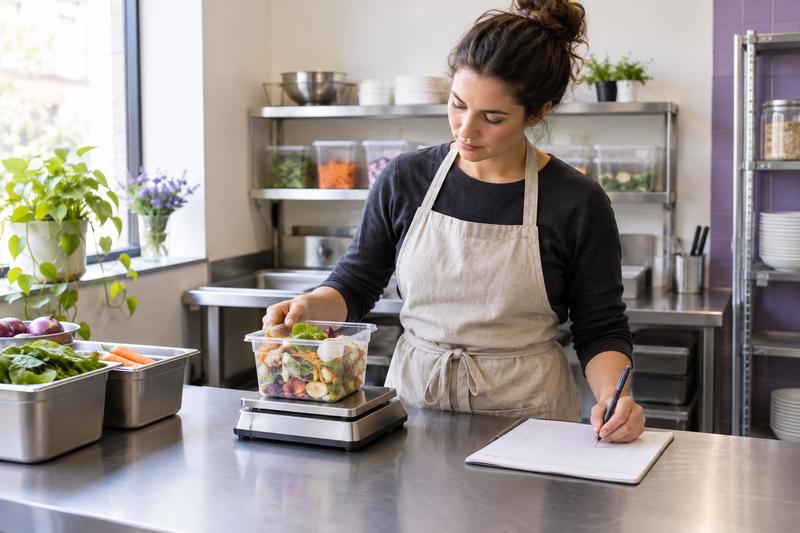

A supplier delivery is not finished when the boxes reach your door. Someone still needs to confirm that the right goods arrived, spot problems before they disappear into storage, record what the business received, and move products to the right place. A short, repeatable receiving routine helps cafés, caterers, food trucks, and small kitchens reduce avoidable invoice disputes and keep a clearer view of supplies.
Keep two aims separate: operational records help you manage orders, quantities, and costs; food-safety checks protect the food and follow the rules that apply to your operation. A spreadsheet or inventory app does not replace safe handling, staff training, or local requirements.
Prepare before the supplier arrives
Choose who is responsible for receiving during each delivery window. Make sure that person can see the purchase order or order confirmation, has access to a suitable thermometer and receiving log when required by your process, and knows where deliveries should be staged. Clear a small inspection area so new goods are not placed directly into storage before they have been checked.
Use a consistent reference for the order: supplier name, order or invoice number, expected delivery date, and the person receiving it. If two people can accept deliveries, agree on a simple handoff so an unreviewed box is not mistaken for a fully checked order. For temperature-controlled food, follow your jurisdiction’s current food code and your establishment’s written procedures.
Check the delivery against what you ordered
Compare each product with the order by name, pack size, and unit—not just by the number of boxes. “Four cases” is not always the same as four individual units. Confirm quantities, inspect packaging for obvious damage or leakage, and note substitutions, missing items, unexpected extras, and price changes before signing off or filing the invoice.
Record exceptions while the details are visible. For example: “Ordered 2 × 5 kg bags; received 1 × 5 kg bag; supplier contacted at 8:42 a.m.” If a substitute arrives, record its actual product and pack size rather than keeping the original item name in the inventory record. Photographing a damaged package or delivery note can be useful documentation if your workplace policy permits it.
Handle temperature-sensitive items using your local procedure
Inspect chilled, frozen, and hot deliveries promptly. Use an appropriate, clean thermometer and the measurement method specified by your food-safety procedure; record a product temperature when required, along with the item and time. If a product appears outside your approved limits, is partly thawed when it should arrive frozen, or shows another sign of possible temperature abuse, isolate it from usable stock and follow your manager’s documented hold, rejection, or escalation process. Do not guess that it is safe based on smell or appearance alone.
The FDA Food Code is a model for retail and food-service safety rules; state, tribal, territorial, and local authorities adopt or adapt requirements. FDA sanitary transportation guidance also describes assessing whether temperature-controlled food may have experienced significant temperature abuse during transport. Use the rules and guidance that actually apply to your business, and consult your local regulator or qualified food-safety professional when you are unsure. This article is an operations guide, not food-safety or legal advice.
Use a receiving log that answers useful questions
A log only helps if staff can complete it accurately without slowing the whole delivery. Keep fields short and consistent. A simple version can be a paper sheet, a shared file, or a system your team already uses.
- Delivery: date and time, supplier, order or invoice reference, receiver.
- Item: product name, pack size or unit, quantity ordered, quantity received.
- Condition: packaging or quality issue, substitution, and temperature reading if required by your procedure.
- Decision: accepted, held for review, or rejected; note who was contacted and what happens next.
- Cost: invoiced unit price and any discrepancy from the agreed price.
- Storage: where the product was put away, plus any date or lot details your procedure requires.
For example, a short entry might read: “Sep 29, 7:35 a.m. / Northside Produce / order 1842 / romaine, 2 cases ordered, 2 received, packaging intact / accepted / invoice unit price matches / receiver: M.” Add a separate exception note if the invoice price or product condition does not match expectations. Keep the record long enough to meet your applicable business and regulatory requirements.
Put accepted goods away and update the records
After checks are complete, move accepted products to their designated storage promptly and keep them separated as your food-safety procedures require. Apply your established date-marking and stock-rotation practices where applicable. Then update the inventory or supplies record with the actual quantity received—not the quantity you expected. If a case was short, recording the ordered amount will make the next count less trustworthy.
Keep purchase and stock records distinct enough to reconcile. The invoice answers what the supplier charged; the inventory record answers what usable quantity entered the business. A mismatch may be a short delivery, a unit-conversion mistake, a substitution, spoilage, or a data-entry error. Mark corrections with a note rather than silently overwriting the original record, so the team can see why numbers changed.
Turn repeated exceptions into a useful review
At the end of a delivery, review any short shipment, damaged item, substitution, or price difference and assign a next step: contact the supplier, correct the invoice, update the order, or revise the purchasing plan. Over time, reviewing repeated exceptions can help you decide whether an order quantity, delivery window, or supplier needs attention. Avoid assuming one bad delivery proves a pattern; look for dated records across several orders.
When supplier prices affect a catering or event quote, save the current supplier assumption and verify it before sending revised client pricing. Our guides on internal quote notes and event-service quote structure cover related ways to keep purchased costs and client scope clear. They do not imply that inventory records and quotes automatically synchronize.
A simple five-step routine
- Match the delivery to the order and confirm product, pack size, and quantity.
- Check condition and temperature-sensitive items using your approved local procedure.
- Record accepted quantities, exceptions, relevant prices, and required traceability details.
- Separate any questionable goods and follow the documented hold or rejection process.
- Put accepted items away promptly, update stock records, and resolve invoice differences.
The best routine is the one staff can follow on a busy morning without relying on memory. Start with a short log, clarify who handles exceptions, and improve the process when recurring problems show up. Ququ’s website describes a Food workspace for menu products and recipes, recording purchases and sales, and reviewing supplies, inventory, and food finances. If those are workflows your business needs, see Ququ’s current product overview and confirm the details that matter to your operation.