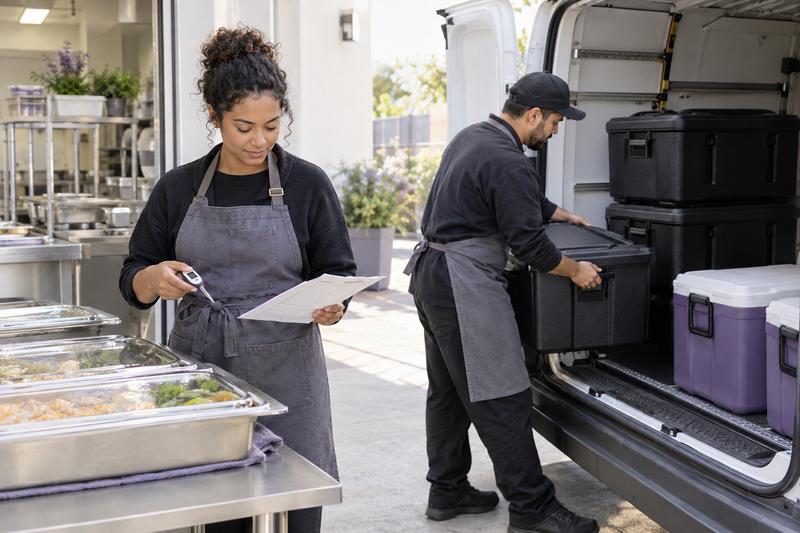

A small ingredient substitution can change more than flavor or cost. A new brand, revised package label, supplier swap, or recipe tweak may affect what staff can confidently tell a customer about a dish. A short change-control routine helps cafés and caterers catch those changes before the item is offered again. It is a recordkeeping and communication aid—not a guarantee that a dish is allergen-free or safe for every guest.
Use a stop-check-update-release sequence
When an ingredient, supplier, package, or recipe changes, mark the affected dish as “hold—review needed” and tell the team not to rely on the old recipe notes. Then work through a consistent sequence:
- Check the source: compare the exact product label and current supplier information with the ingredient already recorded. Do not rely only on a familiar brand name or verbal recollection.
- Review the whole recipe: check every component, including sauces, toppings, seasoning blends, garnishes, and packaged accompaniments—not just the ingredient that changed.
- Assess preparation: review the tools, surfaces, equipment, storage, and sequence used to prepare the dish. Decide whether your established procedures can control cross-contact.
- Update and communicate: revise the recipe or item-level allergen reference, note the date and source checked, and brief the people who answer questions and prepare or serve the dish.
- Release deliberately: have a named manager or trained lead review the change and mark the item approved for service only when the available information and preparation controls have been checked. If anything remains unclear, keep it on hold.
Keep a simple, dated change log
A spreadsheet, binder, or other record your team actually uses can make the review repeatable. Keep the menu-item record tied to the recipe version, and include enough detail to retrace the decision later. A compact entry can include:
- Menu item and recipe version: the dish name and the version or date currently in use.
- Ingredient and supplier: the product name, brand, and supplier, plus what changed.
- Change date and evidence checked: the date reviewed and whether the current package label, supplier specification, or both were consulted.
- Allergen information: the verified ingredient information and any uncertainty that still needs follow-up. Record facts from the source; do not infer an allergen status from a product name.
- Preparation controls: the relevant equipment or handling steps reviewed and the procedure staff are expected to follow.
- Reviewer and service status: who checked the change, who approved release, and whether the item is on hold or cleared for service.
For example, an entry might say: “Herb pesto toast, recipe v3; supplier changed on October 10; new package label checked; whole recipe and shared-prep procedure reviewed; manager initials; hold pending a verified preparation plan.” That is more useful than a note that simply says “pesto updated.” Keep old versions rather than overwriting them, so the team can see which information applied on a particular date.
Worked example: a pesto substitution
Imagine a café receives a different brand of pesto because its usual product is unavailable. The dish name has not changed, but the product label may list a different set of ingredients or handling information. Treat it as a new ingredient: read the current package, compare it with the saved recipe and any other pesto used in the kitchen, and check how the dish is assembled. If the source information is incomplete or staff cannot verify the relevant ingredients, do not make a confident claim to a guest. Keep the dish on hold or offer another option only if that option has been independently reviewed.
When the review is complete, update the recipe version and item reference, then tell the service team exactly what changed and when the new version is approved. A customer request involving a food allergy should trigger that current check; an old menu description or a staff member’s memory is not a substitute for it.
Include cross-contact in the review
Ingredient lists are only part of the picture. Consider shared cutting boards, blenders, pans, utensils, storage containers, prep surfaces, and the order in which foods are handled. Follow the cleaning and sanitation procedures required by your local rules and your food-safety plan. In its research on retail food-contact surfaces, the FDA found the studied full wash-rinse-sanitize-air-dry method effective at allergen removal and minimizing transfer. That is a finding from the studied conditions, not a promise that a quick wipe or any single procedure will make every situation safe.
Make the preparation instructions specific enough to follow during a busy shift. If your team cannot verify the ingredients, equipment, or procedure for a request, pause and ask the manager rather than improvising. A useful response is: “Thanks for letting us know. I’m going to check the current recipe and ingredient information with our manager. We won’t guess; if we can’t verify the ingredients and preparation, we’ll tell you we can’t prepare that request.”
Train the team and check local requirements
Assign one person to approve recipe changes, but make sure the people who take orders and prepare food know where current information lives and when to escalate a question. The FDA’s summary of the 2022 Food Code changes includes food-allergy-awareness training provisions. The Food Code is a model for jurisdictions to adopt; it is not a single rulebook that applies identically everywhere. Read the FDA Food Code overview and check with your local health authority for the requirements and current guidance that apply to your operation.
For a new delivery or supplier substitution, connect this routine to your receiving records: the food-delivery receiving checklist covers documenting substitutions and discrepancies. For planned menu or recipe revisions across a service period, see the catering guide to keeping menu recipes, purchases, and supplies straight.
Ququ’s Food workflow is presented for organizing menu products and recipes, purchases and sales, supplies, inventory, and food finances. A business using it still needs its own verified allergen references, change-review process, staff training, and local food-safety procedures; do not assume the software performs allergen verification or guarantees a dish is safe.