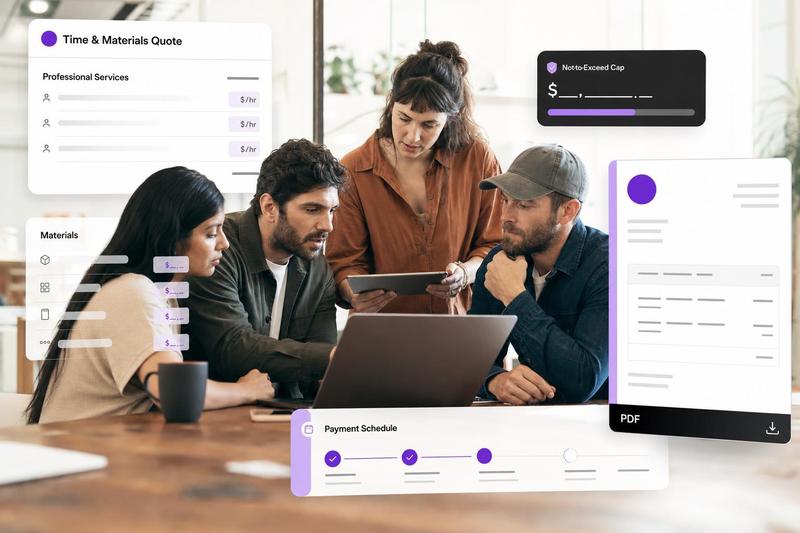

The right pricing model depends on how certain the scope is, who should carry the risk, and how much admin you want after approval.
Use fixed price when scope is clear
Fixed-price quotes work well for defined deliverables: a logo package, a landing page, a repair, a workshop, or a standard installation. They give the client certainty and give you margin upside if you deliver efficiently.
Use hourly when the work is uncertain
Hourly quotes fit discovery, troubleshooting, support, and open-ended advisory work. The client carries more cost uncertainty, so use caps, check-ins, and clear reporting to maintain trust.
Use day rates for focused blocks
Day rates work for consulting sprints, onsite contractor work, or developer support. They are simple to approve, but define what a day includes and excludes.
Use hybrid quotes for phased risk
A hybrid model might price discovery hourly, then implementation fixed. PMI’s project resources are useful context: risk changes as scope becomes clearer.
Check margin before choosing
Model choice affects profit. Review margin vs markup, then add risk reserves when scope is uncertain using risk reserve pricing. QuickBooks’ pricing strategies also help frame cost, value, and competition.
Make change requests explicit
Fixed price needs change-order rules. Hourly needs approval thresholds. Day rates need booking and cancellation terms. Hybrid quotes need clear phase gates.
Build each model in ququ
ququ lets you save reusable products, hide internal cost logic, and send clean branded PDFs for fixed, hourly, day-rate, or hybrid quotes without spreadsheet rebuilds.